


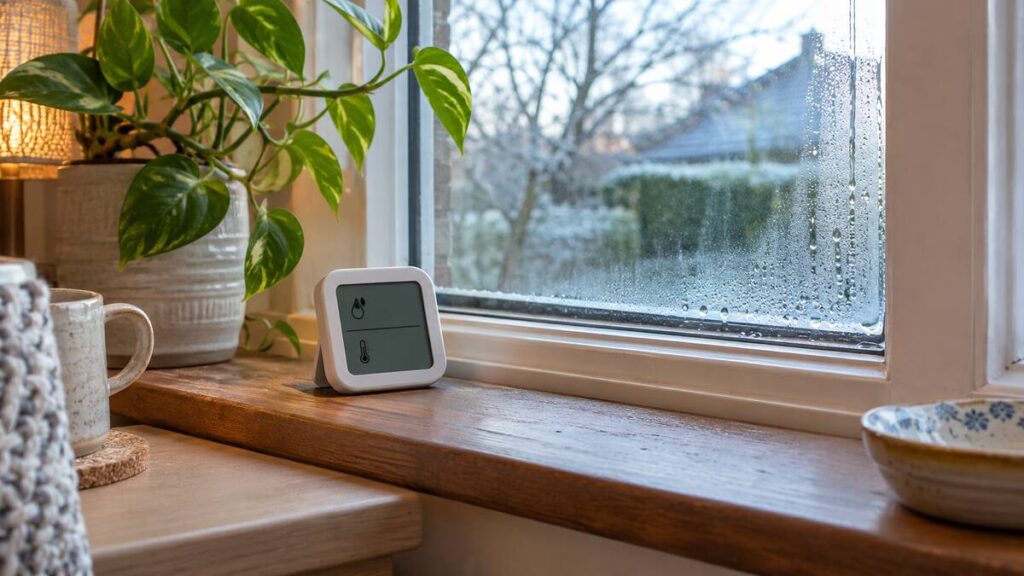
To reduce indoor humidity and stop window condensation, first find where moisture is being added and where damp air is meeting a cold surface. Measure humidity for several days, use kitchen and bathroom exhaust where it vents outdoors, dry wet areas promptly, and choose air conditioning or a dehumidifier only when the readings and room conditions justify it.
The U.S. Environmental Protection Agency’s indoor air guidance recommends keeping indoor relative humidity between 30% and 50%, and below 60% if possible. That is a general guideline, not a substitute for local building advice: climate, heating systems and the cause of the moisture all matter. Here is a practical way to diagnose the problem before buying equipment or sealing a surface.
Table of Contents
What condensation can tell you
Condensation appears when water vapor in air meets a surface cool enough for that vapor to turn into liquid. It often shows first on window glass, cold pipes, exterior corners or behind furniture. A short-lived patch after a shower may point to a ventilation habit; water returning each morning on the same window can also reflect a cold pane, a leak, or a broader humidity problem.
High humidity or a cold surface?
Use the pattern as a clue, not a diagnosis. If a hygrometer reads high in several rooms and condensation appears in more than one place, excess indoor moisture is plausible. If the room reading is moderate but one patch stays wet, check for a local cold bridge, failed seal, plumbing leak or water entering from outside. A normal room-average reading does not rule out a damp pocket beside a cold surface.
Mold spores are common indoors, but persistent moisture can allow mold to grow on suitable materials. EPA guidance emphasizes controlling moisture rather than trying to remove every spore from the air. Drying a small spill quickly is different from treating a recurring wall stain or a room that smells musty; repeated dampness deserves investigation.
Find the moisture source before buying equipment
A dehumidifier can remove water from air, but it cannot fix a leaking pipe, blocked gutter or water coming through a foundation. Before changing settings or buying equipment, spend a day looking for sources and noting when symptoms appear.
Start with the obvious water sources
- Look under sinks, around toilets, washing machines, water heaters and refrigerator lines for slow drips or damp cabinets.
- Check window frames and exterior walls after rain. Note whether stains grow, paint bubbles, or the same corner stays wet.
- Notice moisture-producing activities: long hot showers, uncovered simmering pots, indoor drying racks, unvented dryers, and humidifiers.
- Check whether bathroom and kitchen fans actually move air outdoors. A fan that merely recirculates air will not remove moisture from the home.
Write down the room, time and likely activity beside each wet area. A simple log can reveal a pattern: the mirror clears slowly after a shower, laundry dries in a closed room, or a basement corner gets damp after rain. If water is actively entering, fix the source first; do not use ventilation as a substitute for repairing a leak.
Measure humidity and track patterns
A small digital hygrometer can help you distinguish a brief spike from humidity that remains elevated. Place it away from a radiator, sunny window, exterior wall, bathroom steam or direct airflow. Readings taken in the middle of an occupied room are more useful than a sensor sitting on a wet sill.
A simple measurement routine
- Check the reading at roughly the same times for several days, such as after waking and before bed.
- Add a note after cooking, showering, running a humidifier, drying clothes indoors, or using a dehumidifier.
- Measure more than one room if the home has a basement, closed bedrooms or noticeable temperature differences.
- Compare the pattern with visible condensation and the weather. A single reading is not enough to identify a building defect.
Many household meters are not precision instruments. Use yours to spot direction and persistence, not to argue over a one-point difference. If readings stay above 60% in occupied areas, or dampness persists even when the readings look ordinary, investigate the moisture source and consider qualified help.
Reduce moisture in the rooms that create it
Small behavior changes work best when they remove moisture at the point where it is created. EPA recommends keeping humidity below 60% where possible, ideally around 30% to 50%, but do not force a home to become uncomfortably dry. If the outdoor air is humid or polluted, opening windows may add moisture or contaminants instead of helping.
Kitchen and bathroom habits
Use an exhaust fan while showering and leave it running long enough to clear steam, if it vents outdoors and is functioning correctly. Keep bathroom doors closed during a shower so moisture does not spread through the home. In the kitchen, use a vented range hood when available, cover boiling pots and turn on the dishwasher’s ventilation option only as its manual recommends.
Bedroom, laundry and basement checks
If you dry laundry indoors, give it space and airflow, or move it to a room with an exhaust route. Do not block a return-air grille or place wet clothes over a heater. In a basement, look for water seepage and downspout drainage before relying on a machine. Keep furniture slightly away from cold exterior walls so air can move and you can see early signs of dampness.
For a wet area, remove standing water and dry hard surfaces promptly. EPA’s moisture and mold guidance says wet materials should ideally be dried within 24 to 48 hours; porous items that remain damp may need more than surface cleaning. Avoid painting or sealing a wet, stained material before finding out why it is wet.
Choose the right tool for the problem
Different tools solve different problems. A filter can capture some particles; it does not remove water vapor. Choose based on the cause you observed, and follow the manufacturer’s instructions for installation, drainage and maintenance.
| Option | Best use | Limit to remember |
|---|---|---|
| Exhaust fan | Removing moisture near showers and cooking | Must discharge outdoors and have adequate airflow |
| Air conditioning | Cooling a space while removing some moisture | Performance depends on system, runtime and conditions |
| Dehumidifier | Persistent dampness after leaks and other sources are addressed | Needs correct sizing, a drain plan and regular cleaning |
| Air purifier | Filtering certain airborne particles with a suitable filter | Does not dry the air or repair a moisture source |
Ventilation, air conditioning and dehumidifiers
Ventilate when outdoor air is drier and cleaner than indoor air, and avoid bringing in air during extreme heat, humidity or poor outdoor air quality. Air conditioning can lower moisture as it cools, but a poorly maintained or oversized system may not behave as expected. For a dehumidifier, use a humidistat if available, keep its intake and exhaust clear, empty or drain the tank safely, and clean it as its manual directs.
If you are comparing an air cleaner for smoke, dust or other particles, our air purifier room-size guide explains how room area and clean-air delivery rate affect sizing. That is a separate job from controlling humidity. Equipment also changes electricity use; if bills rise after adding cooling or dehumidification, the guide to checking a high electricity bill can help you compare usage and billing details before replacing appliances.
Keep the building and equipment working safely
Moisture control should not make a home less safe or less durable. Do not block combustion-air openings, disable ventilation required by an appliance, or use unvented combustion heaters as a humidity solution. Check the manuals for HVAC filters and equipment; if a system’s drain line, coil or fan may be involved, have a qualified technician inspect it.
Look outside as well as indoors. Clean gutters and downspouts so roof water moves away from the foundation, and check that soil slopes away from the home. Do not caulk over a recurring leak or cover a damp wall with fresh paint. Where condensation is limited to one cold surface, improving air circulation may help temporarily, but persistent recurrence can indicate insulation or air-leakage work that needs a building professional.
Never mix cleaning products, and do not spray chemicals into HVAC equipment. If you find a small amount of mold on a hard surface, follow EPA’s cleanup guidance and address the water source. Large areas, sewage-contaminated water, hidden growth, or occupants with health concerns call for a more cautious response and qualified assistance.
Use a seven-day humidity action plan
A short observation period helps you see whether the change worked. Keep the same hygrometer in place and avoid changing several things at once, so you can tell which action mattered.
Day 1: observe
Photograph or describe the wet spots, note the meter reading in two or three rooms, and record when cooking, showers, laundry or rain occur. Check for active leaks and inspect fan outlets if accessible without tools or ladders.
Days 2-3: reduce moisture
Repair a clear leak or move moisture-producing activity to a better-ventilated area. Use exhaust during showers and cooking; uncover vents and allow air to circulate around damp surfaces. If outdoor conditions make window ventilation unsuitable, keep windows closed and use the home’s appropriate mechanical ventilation or cooling system.
Days 4-7: check results
Review readings and the same surfaces at the same times. If humidity is moving toward the EPA’s general target range and condensation is decreasing, keep the habits that helped. If it remains high, a dehumidifier may be appropriate after obvious sources are fixed. If the meter is moderate but a wall stays wet, arrange an inspection rather than turning the machine up indefinitely.
Know when to get professional help
Get help promptly for an active plumbing or roof leak, recurring wet drywall, a musty smell that does not clear, visible growth across a large area, or moisture returning after reasonable ventilation and source control. A plumber, roofer, HVAC technician or building-envelope professional may be more useful than a general mold treatment service, depending on the suspected cause.
For a small, isolated patch on a hard surface, EPA offers basic cleanup advice; porous materials and large or contaminated areas need more care. If someone in the home has asthma, allergies or other symptoms they believe are linked to dampness, discuss the situation with a healthcare professional rather than relying on an air-quality device to diagnose illness.
The useful sequence is simple: find the water source, measure the pattern, remove moisture where it is made, and choose equipment only for the remaining problem. That approach is less wasteful than buying a purifier or dehumidifier first, and it makes it easier to know when a building repair is the real answer. See the EPA’s guide to mold, moisture and the home and its updated indoor moisture guidance for additional detail.